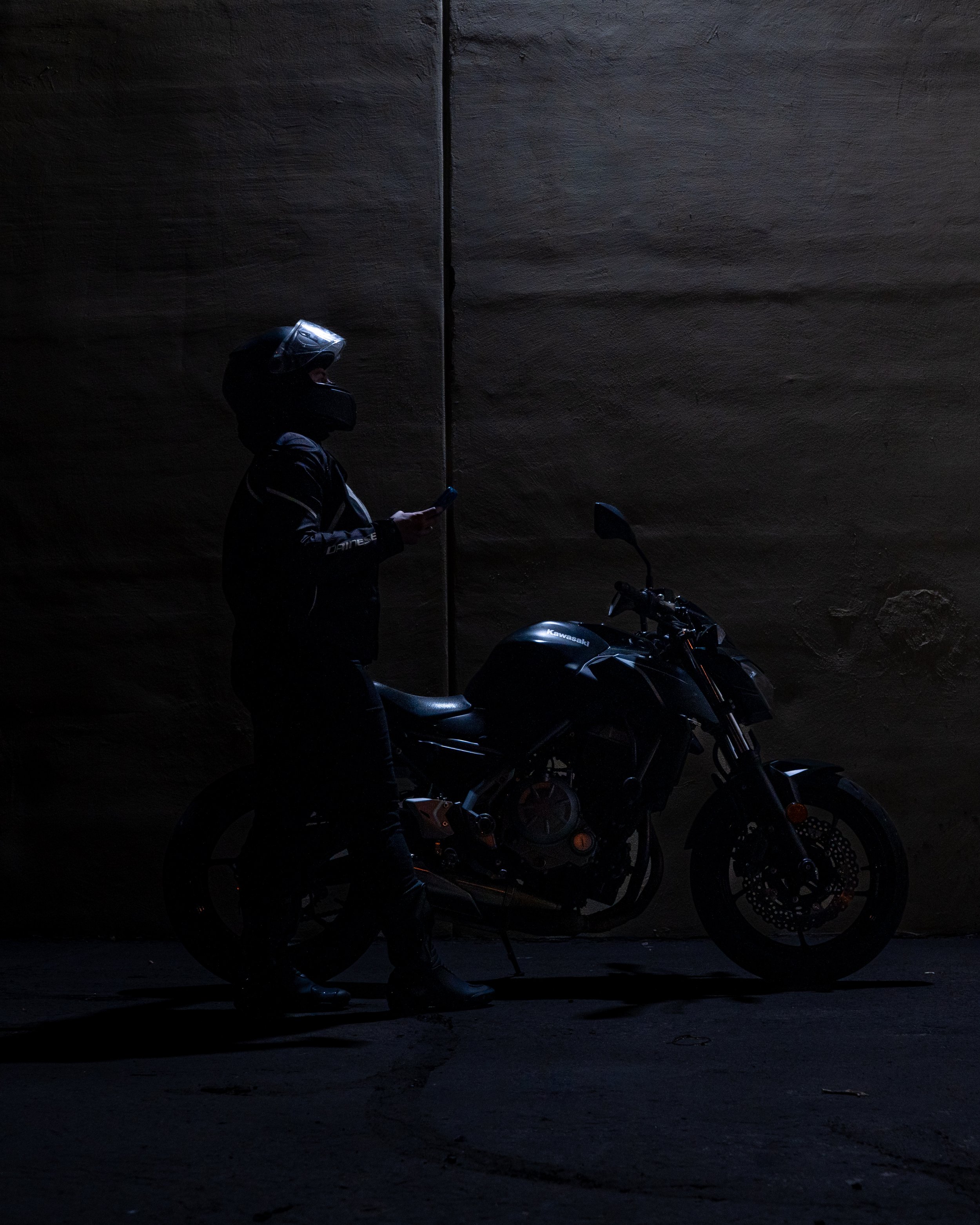
Spotlight: Heather Porter
At Chi Riot, we’ve always believed that riding is only part of the story. The women we’re drawn to, and the ones we want to build alongside, are creating lives around motorcycles that are layered, evolving, and deeply personal. So, after a few years we connected back with Heather Porter, better known as @motomoxie.
Heather stood out to us not only as a rider, but as a creative. She’s a photographer who has consistently honed her craft while staying true to herself, and over the years we’ve watched her work grow in ways that feel organic and special.
We’ve always wanted to feature Heather in a more meaningful way, so we reached out with a series of questions about her journey, her work, and how motorcycles have shaped her life. Below are her answers, shared in her own words.
How did you get into riding motorcycles, and what do you ride now?
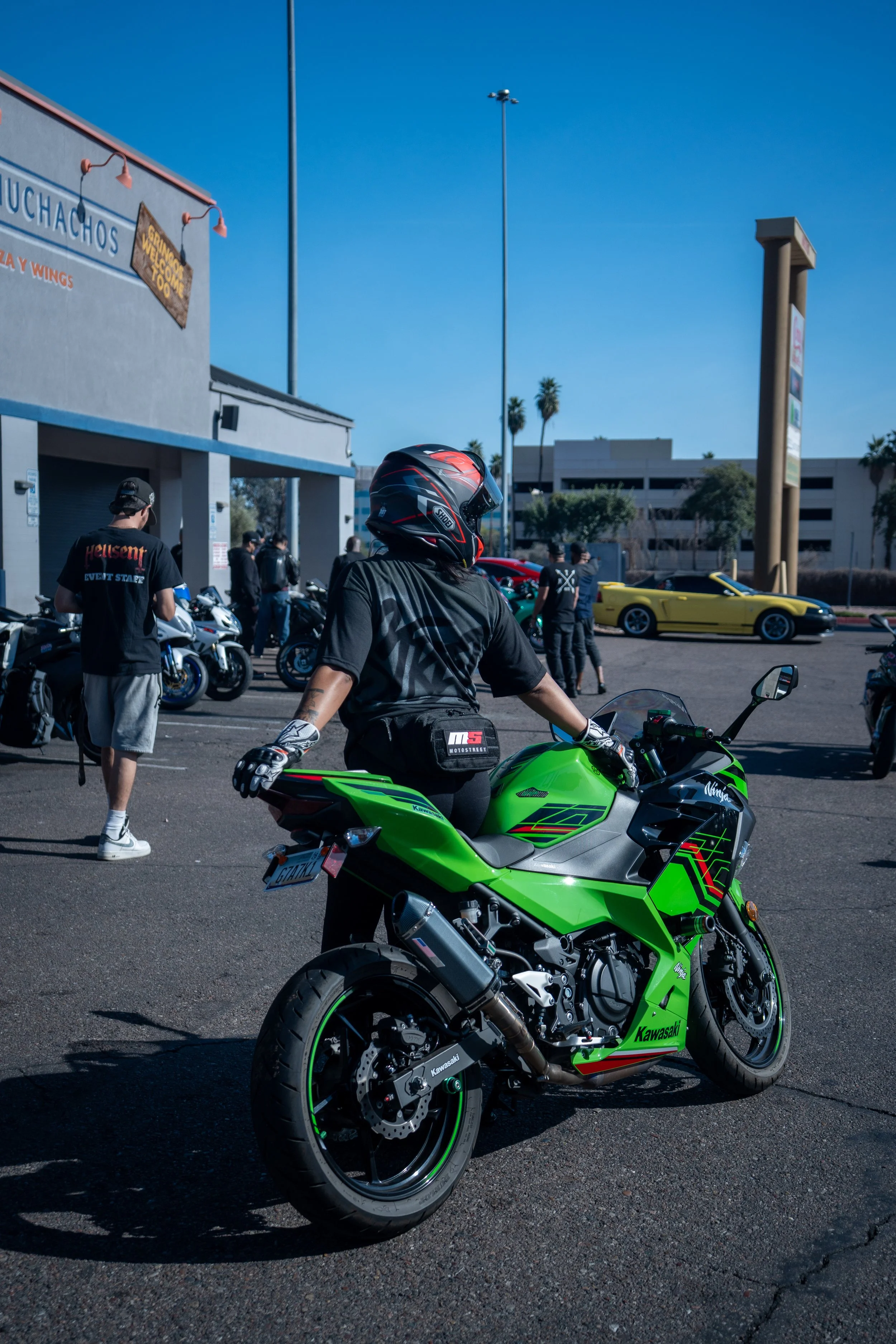
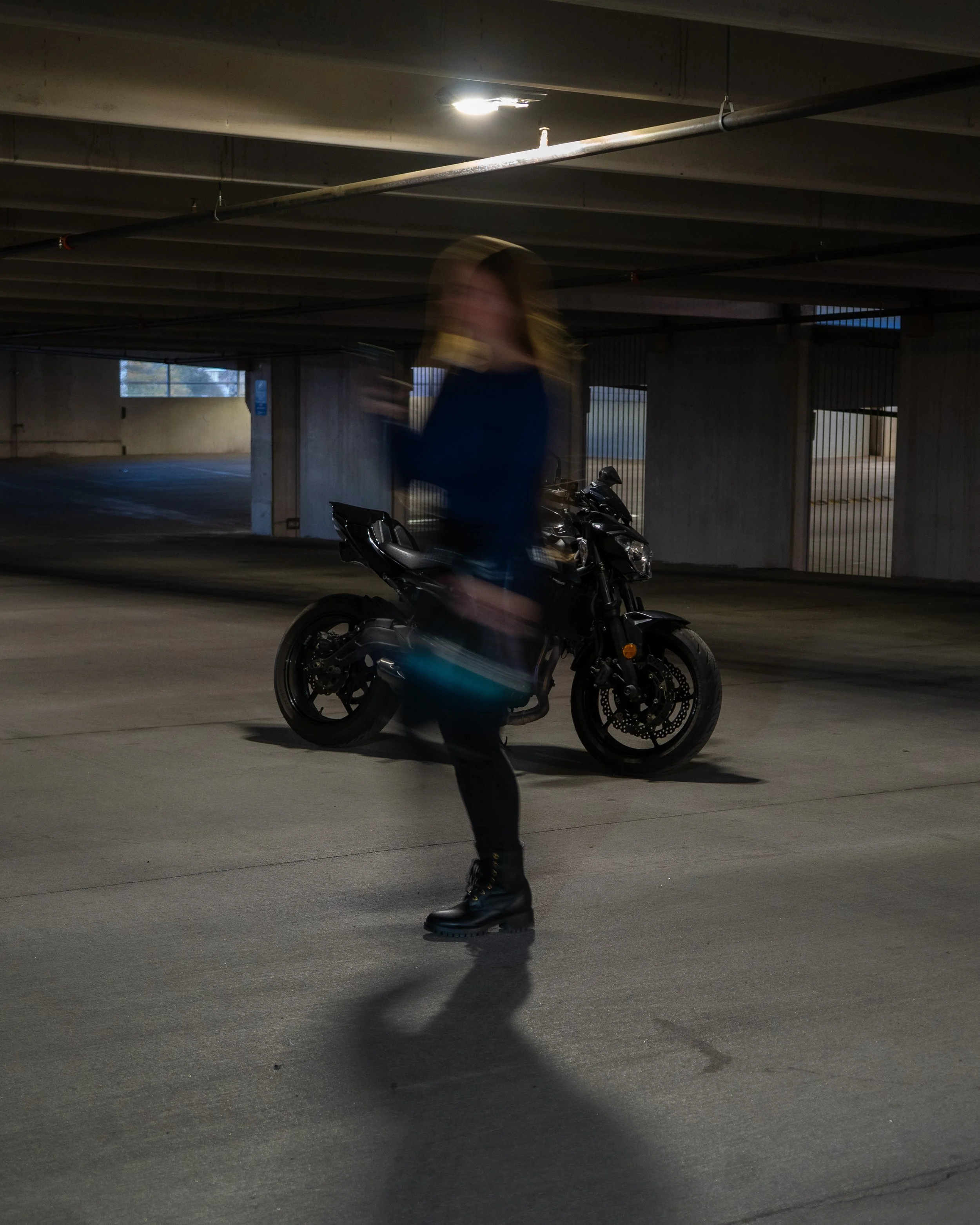
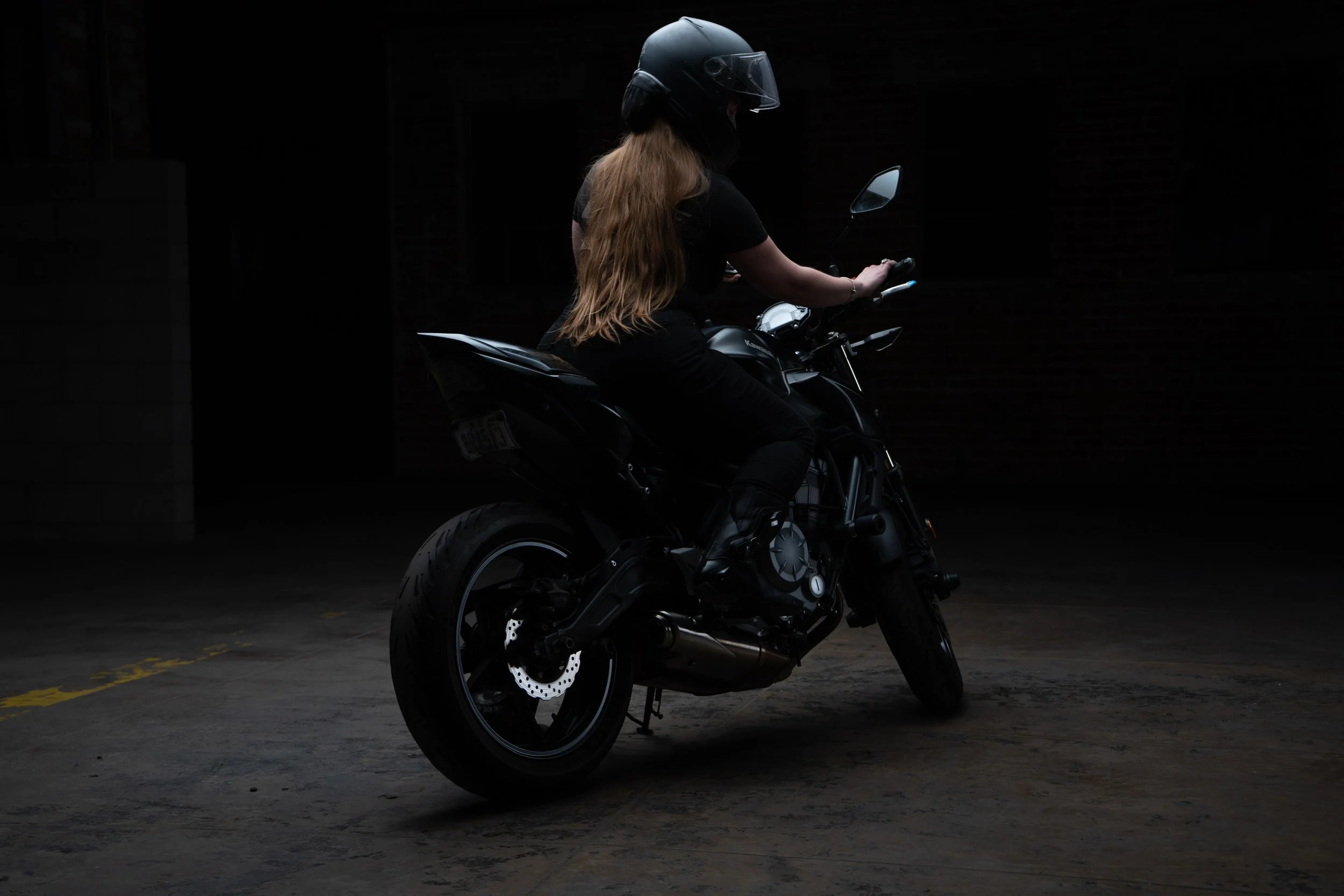
I had always wanted to ride, thinking about motorcycles when I was about 10-11. I had heard my dad talk about stories of him riding his Goldwing, and I couldn’t stop imagining myself riding. My parents said they would not support me riding, so I had to wait until I moved out. I took the MSF in 2018 and bought my z650 Jan 1 of 2020. I am currently riding my Kawasaki z650 and KLX300. They both have taught me so much!
As a woman, what’s been the most surprising part of becoming a rider?
What was surprising was how foreign the concept was to me to take the space I needed. From a safety perspective on the road and in your lane, but also at meets and events. When I first started, I constantly had to remind myself that I was “allowed” to be here even if I was the only girl and everyone acted like I didn’t exist. It’s also been very surprising how strongly everyone reacts when they find out I ride; suddenly, riders and nonriders are all experts on my life and motorcycles.
How did photography become part of your life, and how did it intersect with motorcycles?
I started shooting on my dad’s film camera when I was 6, taking photos of horses and theatre rehearsals. I have always carried my camera with me everywhere, and when I started riding, it helped me get through the initial fear and overwhelm that came with riding. I would coerce myself into riding to unfamiliar places so that I could take cool photos. Ultimately, this helped me become comfortable on my bike, maneuvering it, and building self-trust. Now, it is my source for catharsis and escape.
Do you feel your photography has helped you see yourself differently as a woman or rider?
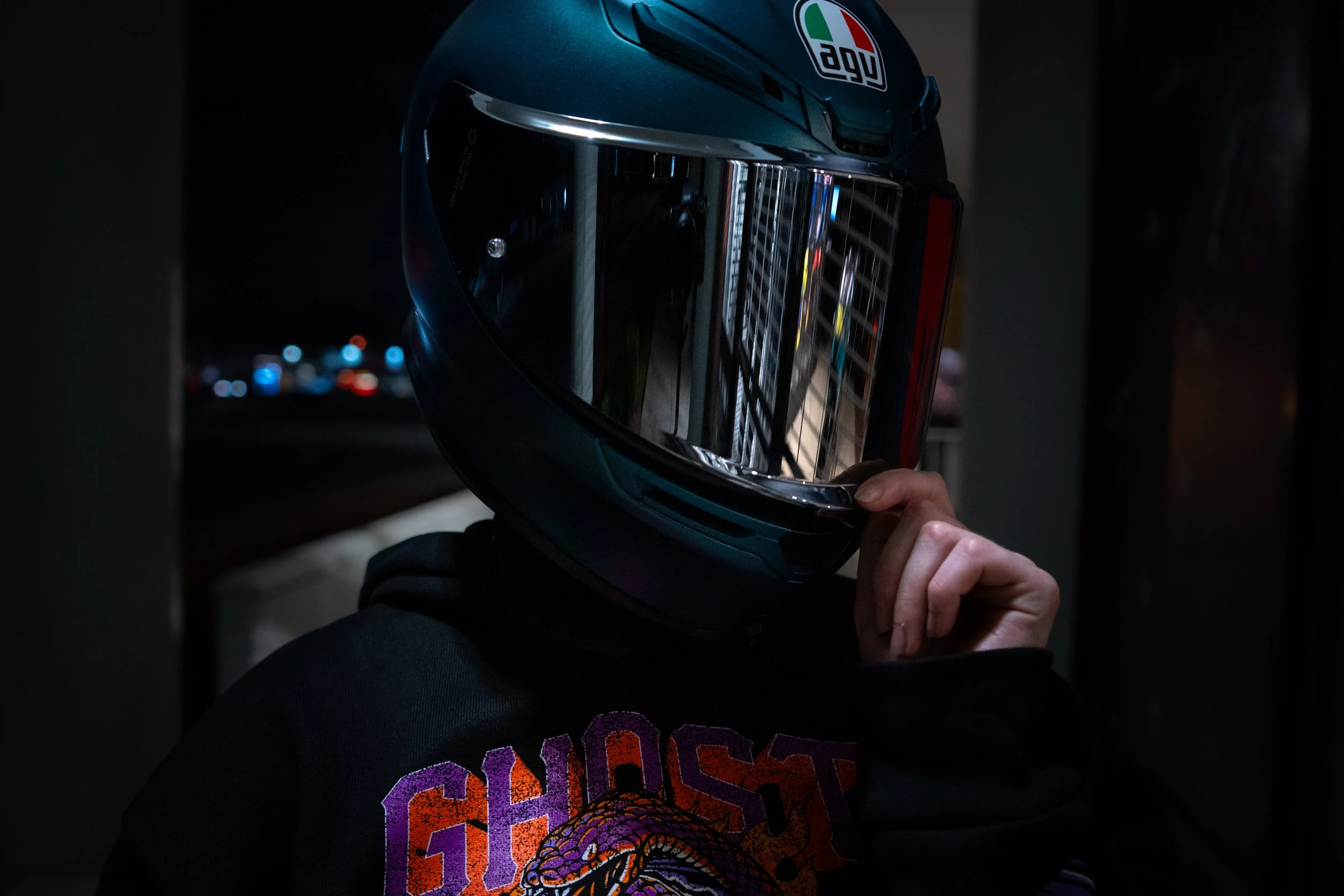
Photography helps me see all the ways to challenge stereotypes as well as remind me to notice beauty and grace in brief moments. Especially since I mostly do self-portrait shoots, I had to learn all my bad and good angles…getting to that point required a lot of self-acceptance and a lot of bad pictures, but it absolutely raised my confidence. I often forget that people can see me, so photographing myself and posting on Instagram was definitely exposure therapy in authentic expression.
Have you ever felt pressure to “look a certain way” as a woman on a motorcycle?
Oh absolutely, whether it is self-imposed or socially imposed, I find myself second-guessing a lot. What part of myself am I expressing right now? Is this the image I want to convey? There’s this immense pressure to be sexy but not too sexy, to have everyone’s attention but don’t give anyone any. I personally find this line very difficult to navigate as a friendly, Southern woman currently in the west. It exemplifies the double standard that women experience, and the morality tied to beauty, ethics, and the male gaze. Especially as a thicker woman, I often feel as though my body does not belong in this space. Good fitting, high quality gear is exceptionally hard to find and is not usually on the rack to try on in store, and most successful female motorcycle creators are very slim. It is challenging to exist in that space.
What does a typical shoot look like for you, from idea to final image?
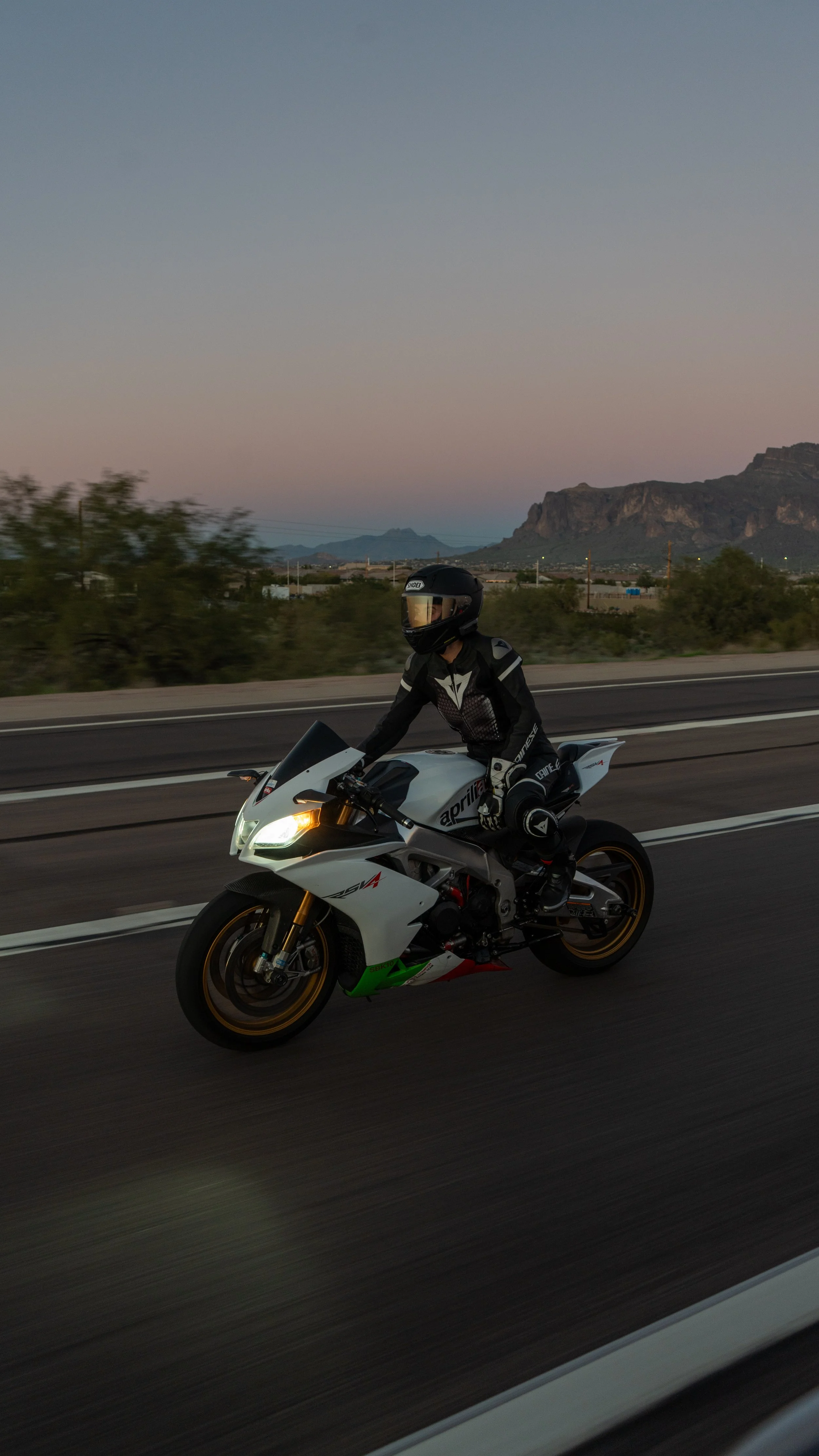
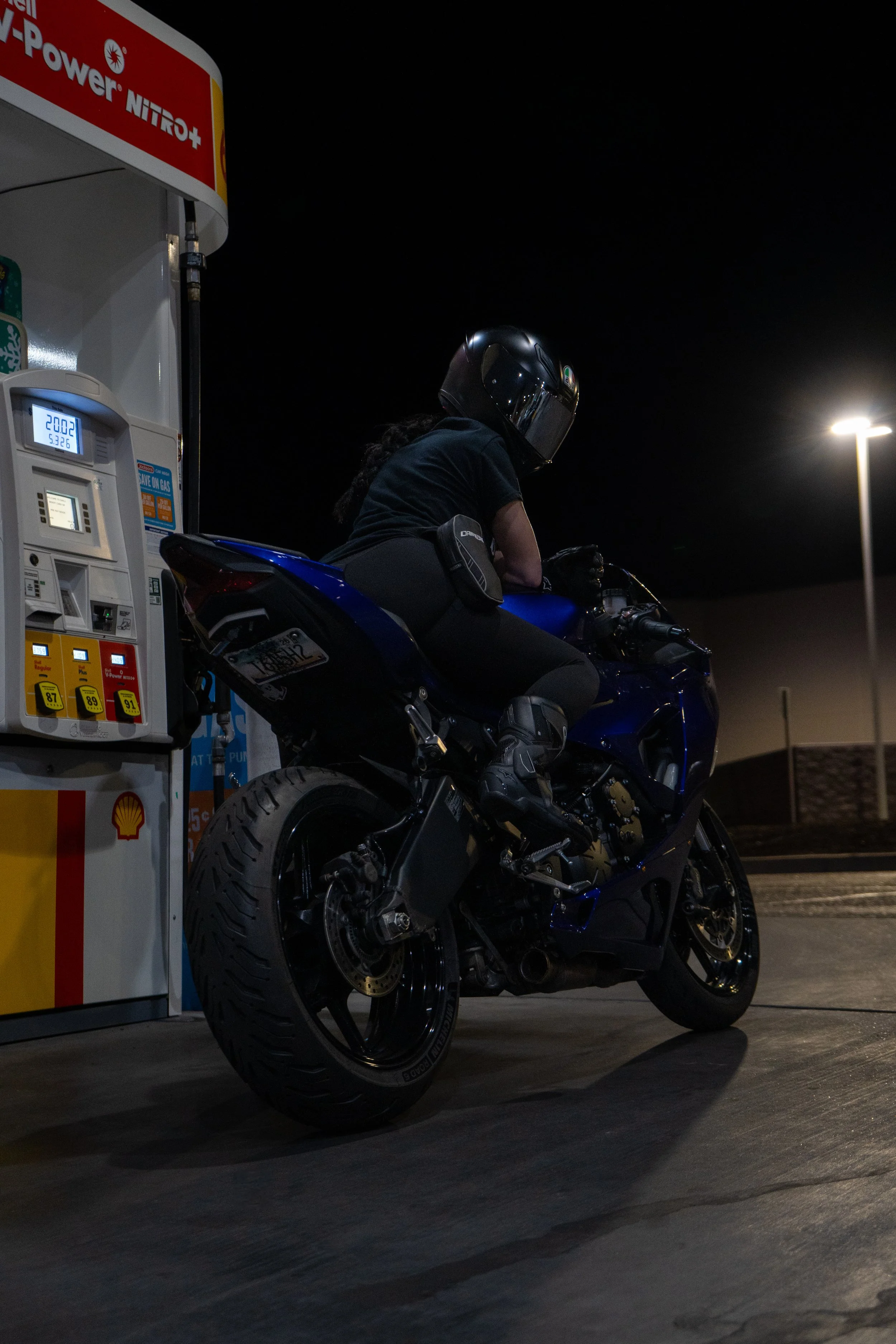
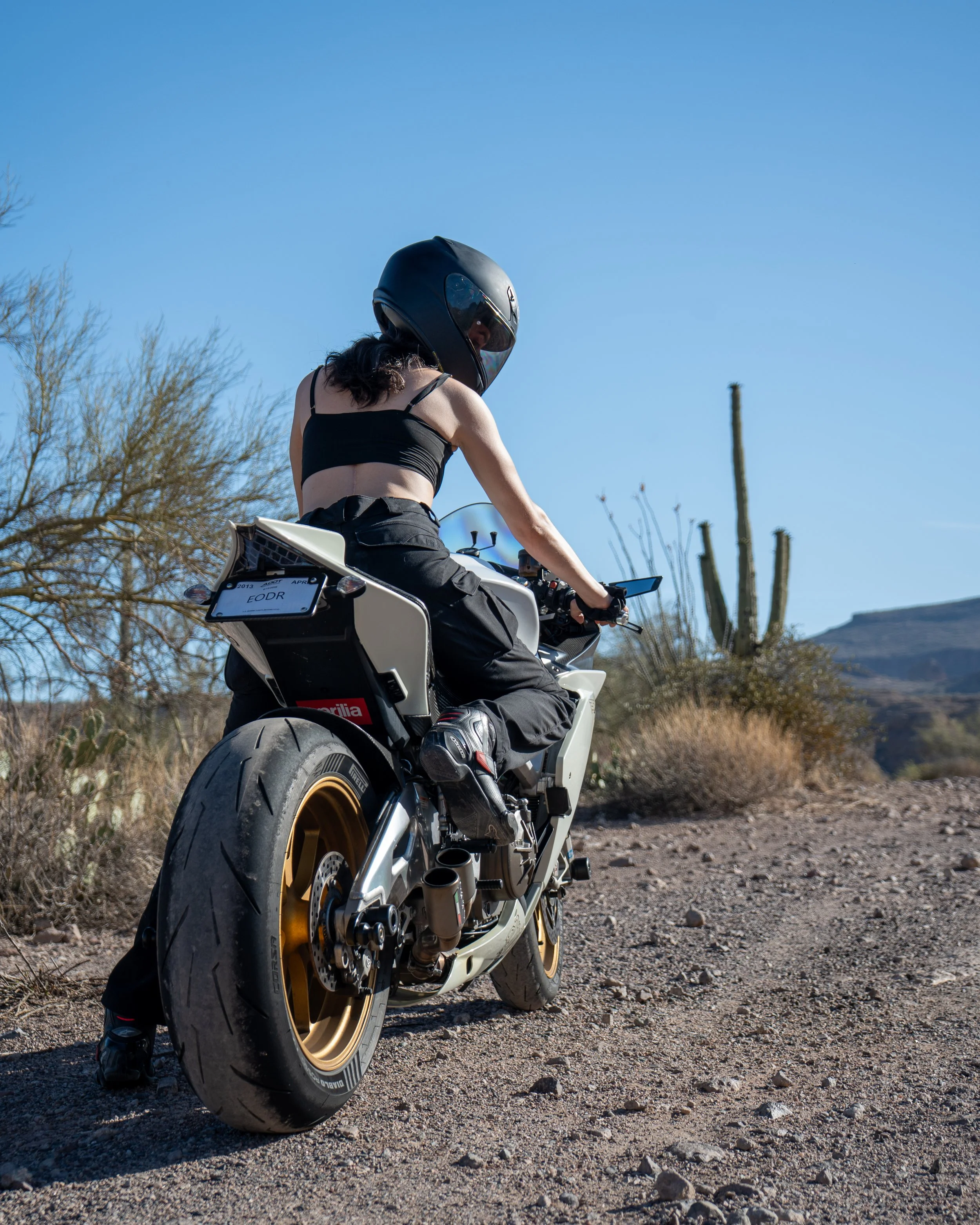
I usually start with the vibe I want to emulate and build an outfit around that; the outfit generally decides which bike I’m riding. I ride around until I find a location that I like, and set up my tripod, and connect my remote on my phone to my camera. The first couple minutes I spend “warming up,” and then I just try to listen to my music, try new things, and have fun. I try to give myself a few days between shooting and editing to decompress, and then I upload everything to Lightroom. I’m currently revisiting my editing style as I transition into more cinematic, aesthetic direction.
What’s the most challenging part of shooting motorcycles or cars?
Finding locations! Sometimes a place will look perfect, and of course I’m not allowed to be there. I try to be as respectful of property as possible, but it is difficult especially in Scottsdale.
What’s one photo you’ve taken that really sticks with you and why?
This is hard one. I recently attended a creators’ event in Mesa, AZ where automotive and motorcycle creators could come and take photos under some lighting equipment. I was super intimidated to pull out my tripod in front of the professional photographers/videographers, Aston Martins, and McLarens, but those photos are some of my favorites I have taken on my bike thus far, and I’m proud of myself of being able to create through the initial discomfort.
How do riding and photography shape the way you move through the world?
It reminds me to slow down and be observant. It enforces to not judge a book by its cover and to be open to learning, improving, and growing constantly. I struggle with being present, and riding and photography forces me to be present in things that give my life so much meaning that I don’t want to be anywhere else. It has also strengthened the trust I have in myself and my intuition.
This might be a hard one, but, if you had to choose between riding or shooting for one year, you can only pick one, which one would you pick?
This is also a hard one. I always say I’m a writer and a photographer before I’m anything else. However, I can’t go without riding more than a few days. I’ve taken a few year hiatuses from shooting which has strengthened my photography. But A) motorcycle skills are rented, and B) I feel like the best version of myself when I’m riding, and I couldn’t sacrifice those feelings for any amount of time anymore.
We’re grateful to Heather for taking the time to share her perspective with us and for being part of a community of women who are reshaping what it looks like to ride, create, and exist in motorcycle spaces on their own terms.
If you’ve been following Heather’s work, or if this is your first introduction to her, we hope her story resonates with you. Go give her a follow if you're not @motomoxie and tell her Chic Riot sent you.